
-
Budget Binder | Minimalist
Regular price $280.00 TTDRegular price -
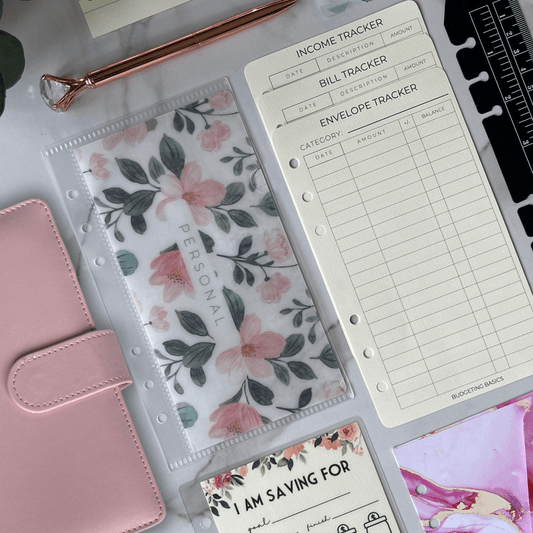
Budget Binder | with Floral Vellum Insert
Regular price $300.00 TTDRegular price -
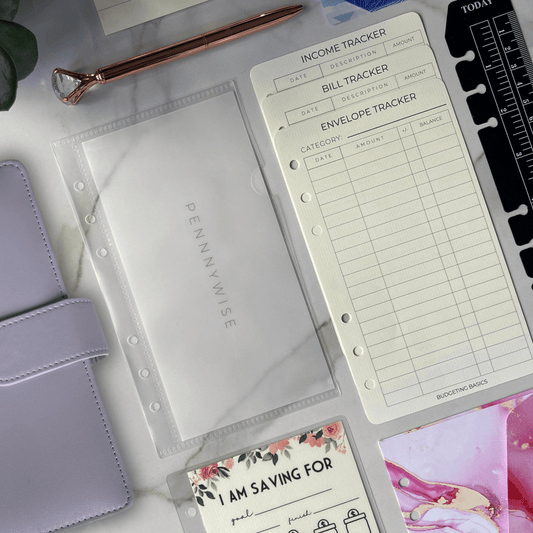
Budget Binder | with Minimalist Vellum Insert
Regular price $300.00 TTDRegular price -
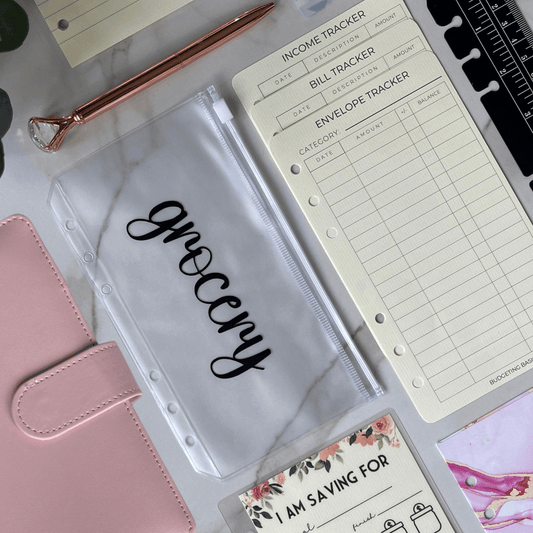
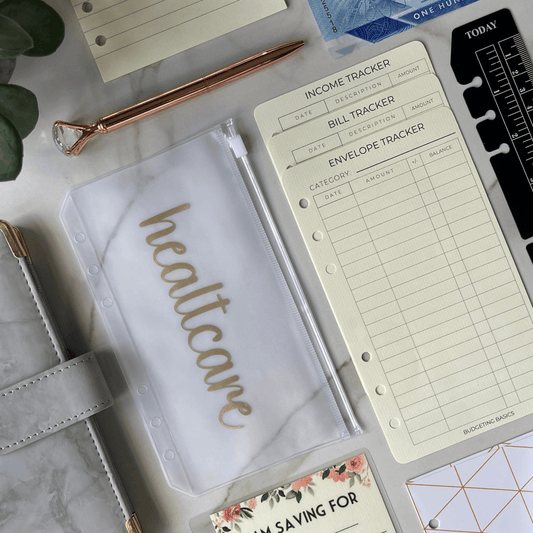
Budget Binder | Marble
Regular price $300.00 TTDRegular price -
Budget Binder | Tropical Series
Regular price $300.00 TTDRegular price -
Cash Envelopes | Add-On
Regular price From $60.00 TTDRegular price






FREQUENTLY ASKED QUESTIONS
BUDGET BINDERS
What Is A Budget Binder?
A budget binder is a physical system for managing your money using cash.
It holds your cash envelopes, budget tracker inserts, and financial records all in one organised place.
Each month you plan your budget, divide your cash into labelled envelopes by category, and track your spending as the month progresses.
It's one of the most effective ways to take control of your finances because it makes every dollar visible and intentional.
What Is Cash Stuffing?
Cash stuffing is the practice of dividing your monthly income into labelled cash envelopes — one for each spending category such as groceries, bills, transport, entertainment, and savings.
When an envelope is empty, spending in that category stops for the month.
It's makes overspending much harder because you can physically see exactly how much is left in each category at any time.
What Comes In A Budget Binder?
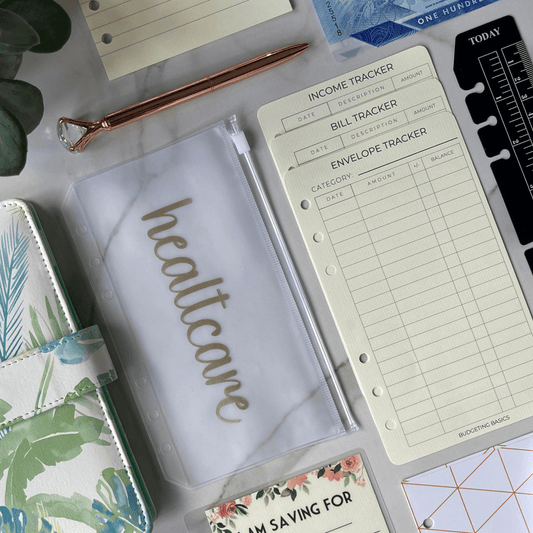
Each budget binder comes with cash envelopes and budget insert sheets so you can start using it straight away. The inserts include income trackers, expense trackers, envelope trackers, and bill trackers — everything you need to manage your monthly budget in one place.
Additional inserts are available separately in packs of 50 if you need to restock.
What Is The Difference Between The Budget Binder Styles?
All our budget binders are A6 size and work the same way — the difference is purely in the design and what's included.
The Minimalist binder is clean and simple.
The Marble binder has an elegant marble print in pink or grey.
The Tropical Series has a vibrant tropical.
The Floral Vellum and Minimalist Vellum versions include a decorative vellum insert for an extra finishing touch.
What Are The Tracker Inserts For?
The tracker inserts are refill sheets for your budget binder.
The Expense Tracker helps you log every purchase.
The Income Tracker records all your income sources for the month.
The Envelope Tracker helps you manage what goes in and out of each cash envelope.
The Bill Tracker keeps all your monthly bills in one place so nothing gets missed.
All inserts are sold in packs of 50.
Is A Budget Binder Right For Me?
A budget binder works well if you want a clear, hands-on system for managing your money, prefer working with physical cash over digital banking, and want to see exactly where every dollar goes each month.
It's particularly effective if you've tried budgeting apps or spreadsheets but found it hard to stay consistent — having something physical to pick up and update makes the habit much easier to maintain.
What Is The Difference Between A Budget Binder And A Savings Binder?
A budget binder and a savings binder serve two different purposes and are often used together rather than instead of each other.
A budget binder is for managing your monthly spending. It helps you track your income, organise your cash into spending categories, monitor your bills, and control where your money goes each month. Think of it as your monthly money management system.
A savings binder is for building toward a specific savings goal. It helps you set aside money consistently — whether daily, weekly, or monthly — until you reach your target. Think of it as your savings progress tracker.
In simple terms — your budget binder manages the money you spend. Your savings binder grows the money you keep.
Do I Need Both A Budget Binder And A Savings Binder
Not necessarily — it depends on your financial goals.
If your main priority is getting your monthly spending under control, start with a budget binder.
If your main priority is saving toward a specific goal, start with a savings binder.
Many of our customers use both together — the budget binder manages their monthly income and expenses, while the savings binder tracks a separate savings goal running alongside their budget.
Can I Use A Budget Binder If I've Never Budgeted Before?
Yes — our budget binders are designed to be straightforward even if you've never budgeted before. Everything you need is included.
The tracker inserts guide you through recording your income, expenses, bills, and envelopes step by step.
If you're completely new to budgeting, our blog post on how to use a budget binder walks you through the full setup from the beginning.
How Many Cash Envelopes Do I Need?
This depends on how many spending categories you have in your budget.
Most people start with six to ten envelopes covering their main categories — groceries, transport, bills, entertainment, self care, children, savings, and an emergency fund.
You can always add more categories as your budgeting system develops.
Our budget binders come with 10 Customised Cash Envelopes, and additional cash envelopes are available separately.

How to Choose Your Cash Envelope Categories
Not sure which categories to use for your cash envelopes? You're not alone — this is the question most people ask when they start cash stuffing for the first time.
The answer is simple: your categories should match where your money actually goes, not where you wish it went.
Start by looking at your last month of spending and group it into buckets. Most people in Trinidad and Tobago start with these core categories — groceries, transportation, eating out, bills, personal care, and savings. From there you add or remove based on your own lifestyle.
For example: If you spend $1,500 TTD on groceries each month, that envelope gets $1,500. If you spend $400 on transportation, that envelope gets $400. You're not guessing — you're planning based on what you already know about your spending.
A good rule of thumb is to start with five to seven categories. Too few and you lose control. Too many and the system becomes overwhelming. Find your number and build from there.
Want to see exactly how to set up your envelopes from scratch?
Watch our full guide on YouTube to see exactly how to set up your envelopes step by step.

